Wearables in Australian general practice: what to do with the numbers on your wrist
Wrist wearables now arrive in Australian general practice as screenshots, not as a diagnosis. This guide covers atrial fibrillation claims, step counts, sleep scores, what GPs can usefully review, and how to share data without dumping a spreadsheet on the front desk.
Dr Elise Tan, GP and digital health editorUpdated
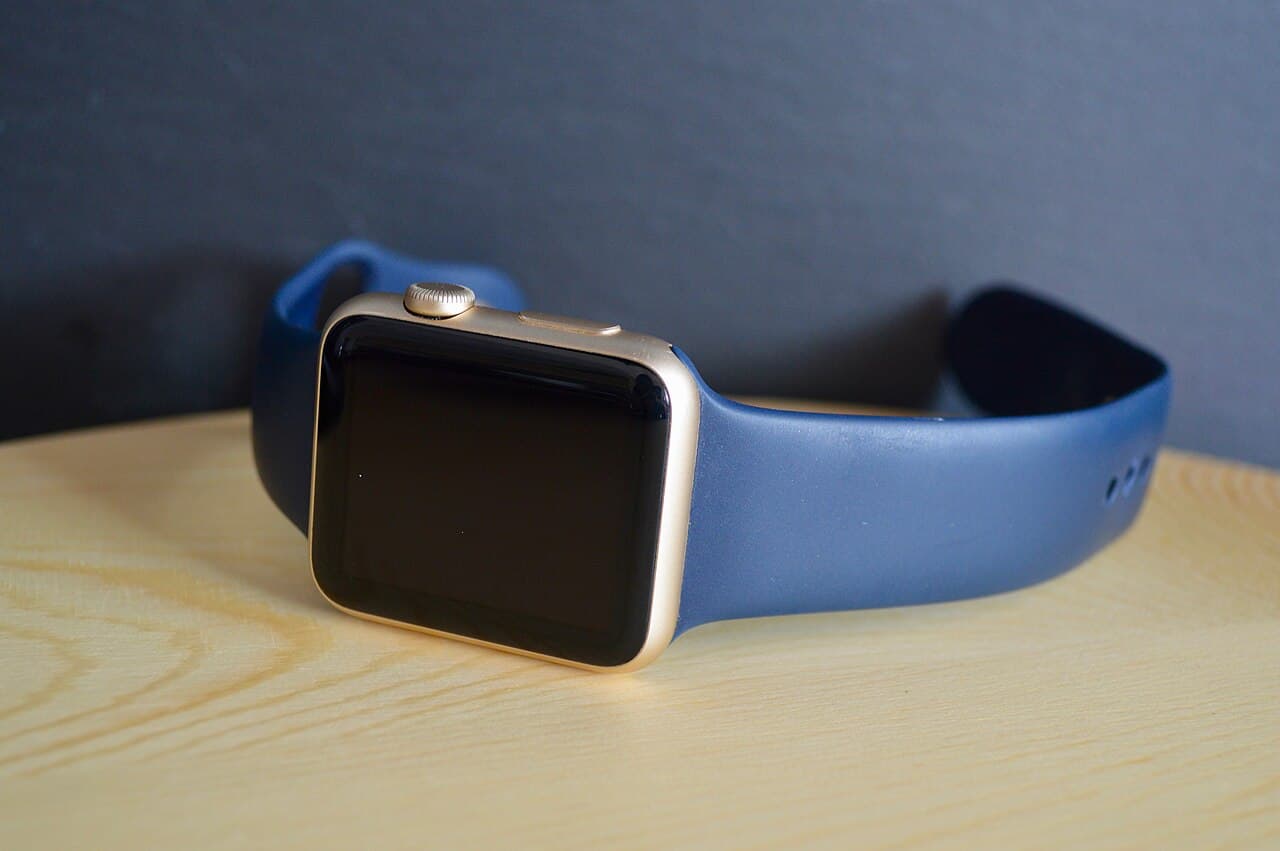
The waiting room has a new artefact. It is not an X-ray. It is not a specialist letter. It is a phone, brightness turned up, displaying a circle that claims you slept poorly, a spike that claims your heart “fluttered” at 2:14 am, and a score that claims you are 64 per cent ready for the day. The owner would like the GP to look at it before the six-minute consult is over.
Some of that data is a genuine prompt. Consumer wearables can notice an irregular pulse, count movement, and, on certain devices, record a single-lead electrocardiogram. Some of it is noise dressed as a dashboard. Australian general practice is now in the awkward middle: too scientific to ignore a repeated atrial fibrillation alert, too time-poor to import a CSV at the front desk, and too experienced to treat a sleep score as a sleep study.
This is a field guide for the numbers on your wrist. It is not an instruction to start, stop, or buy any device. It is not personal medical advice. It is about what a GP can usefully review, what they should politely ignore, and how to share the interesting part without turning the reception bench into a data warehouse.
What the wrist can actually see
A typical watch or band is a consumer sensor package. A green light estimates pulse by watching blood volume in the skin. An accelerometer infers steps and sometimes sleep. A subset of devices add electrodes for a brief single-lead ECG. A smaller subset market irregular-rhythm notifications that run in the background.
These are not ward monitors. Movement, tattooed skin, a loose strap, atrial or ventricular ectopy, and ordinary fidgeting can all confuse optical sensors. Cold mornings make the signal worse. So does a spin class. The device then does what consumer software does: it guesses, it smooths, and it presents a number with more precision than the method deserves.
That does not make the category useless. It makes it a screening and trend tool. The useful question in general practice is not “is this FDA-or-TGA-adjacent feature impressive?” It is “does this change what we do next for this person?”
Sometimes yes. A person with episodic palpitations who finally captures a tracing during symptoms has given the clinic a clue that used to require luck and a Holter monitor. A person recovering from a joint replacement whose step count collapsed after week two has given a physiotherapist something firmer than “I think I have been taking it easy”. A person with diabetes who already lives in a glucose graph may already know how to treat device data as a conversation, not as a verdict — a theme we take up in digital diabetes care, CGM and the NDSS.
Sometimes no. A single overnight ping in a person who feels well, with no repeat and no symptoms, is not an emergency dressed as a watch face. It may still deserve a conversation. It does not deserve a full cardiac work-up by default, and it does not deserve to be laughed out of the room. The medicine is in the middle.
Atrial fibrillation claims, without the keynote
Atrial fibrillation — AF — is a common arrhythmia, more so as people age, and it matters because it can raise stroke risk in the people for whom anticoagulation is appropriate. That sentence is the entire reason watch companies mention it. The marketing then takes a holiday from the caveats.
An irregular-rhythm notification is a statistical suspicion. It is not AF. A single-lead ECG on a watch can look like AF to a trained eye, or it can look like artefact, or it can look like something else. Confirmation, when it is needed, still happens in the ordinary way: history, examination, a 12-lead ECG, sometimes ambulatory monitoring, sometimes a conversation about whether this is AF that needs treatment or a brief run that needs watching.
If your watch keeps flagging irregular rhythm, do not diagnose yourself in the app store. Do not start or stop a blood thinner because a consumer algorithm is confident. Do book the GP if the alerts repeat, if you have symptoms, or if you already have a reason to be careful — valvular disease, a prior stroke, a known cardiomyopathy. If you have chest pain, severe breathlessness, fainting, or a pulse that feels dangerously fast or slow, that is not a wearable problem. That is urgent care.
GPs, for their part, have learned a new sentence: “Show me two or three of the best traces, and tell me what you felt.” They have also learned that a gallery of fifty almost-identical screenshots is how a consult dies.
Step counts: blunt, stubborn, still useful
Step counts are the least glamorous number on the watch and one of the more defensible. They are not accurate in the laboratory sense. They under-count a person who walks with a frame. They over-count a person who cooks energetically. They do, however, trend.
In general practice a trend is often enough. A person with heart failure whose daily steps have halved may be fluid-overloaded, depressed, or simply ice-bound in a Canberra winter. A person on a return-to-work plan after a fracture can show that they are moving, or that they are not. A person who wants to “be better” can pick a direction of travel that is less cartoonish than ten thousand, a figure that entered popular culture without being a clinical law.
What step counts are not: a cardiorespiratory fitness test, a fall-risk score, or proof that a person with pain is “not trying”. GPs who use them well treat them as one more vital-ish sign. GPs who use them badly let the number moralise the patient.
If you want a step count reviewed, bring a weekly average and a sentence. “I was at about six thousand, then I had the chest infection, now I am at two.” That is data. A screenshot of a single triumphant Tuesday is a mood.
Sleep scores and the wellness industrial complex
Sleep is where wearables become most confident and least medical. Consumer devices infer sleep from movement and pulse. They then issue a score, a stage chart, and sometimes a lecture. Polysomnography — the formal sleep study — they are not.
That does not mean the graph is empty. A person who believes they sleep seven hours and the watch consistently shows fragmented time in bed has a hypothesis. A person with dream-enactment, loud snoring, witnessed apnoeas, or dangerous sleepiness at the wheel has a clinical problem whether or not the watch agrees. The device can support a referral conversation. It cannot replace it.
What to treat as noise
What to treat as noise:
- nightly “readiness” or “body battery” scores with no agreed clinical meaning
- precise percentages of REM advertised to two decimal places
- gold badges for a single long weekend sleep-in
- any claim that a consumer band can diagnose obstructive sleep apnoea on its own
What to bring if sleep is the actual reason you booked: a fortnight of bed and rise times, caffeine and alcohol as they really are, shift-work pattern, and the symptom (snoring, restlessness, sleepiness, insomnia). If you have a wearable graph that matches those nights, include it. If you have a score that shames you, leave it at home. Shame is not a vital sign.
Mental health is adjacent here, and easy to tangle. A watch that nags about sleep can worsen insomnia in people who already watch the clock. It can also be part of a broader digital mental-health story that has very different evidence rules from a step counter — see digital mental health, Better Access and apps. Do not ask a readiness score to do the work of a psychologist.
What a GP can usefully review in a standard consult
Time is the constraint. A GP is not a data scientist, and Medicare was not designed for a firmware update. The wearable information that survives contact with a real appointment tends to look like this:
- a symptom (palpitations, dizziness, fatigue, pain on walking)
- a time window (three nights last week; every afternoon after the hills)
- a small exhibit (two ECG screenshots, a week of steps, a heart-rate spike that lines up with the symptom)
- a question (“Is this AF?” “Am I safe to keep training?” “Is the watch noise?”)
That bundle can change management. It can justify a 12-lead ECG today. It can support a Holter. It can reassure. It can also reveal that the person is anxious about the device more than about their body, which is itself a clinical finding and not a moral one.
What rarely helps:
- a year’s raw heart-rate export emailed to the practice inbox
- a third-party PDF generated by an app the GP has never heard of
- a request to “just look through it all”
- a comparison with an online forum’s normal ranges
- a demand for a test because the warranty booklet mentioned a doctor
Reception staff should not be asked to print a novel. Health-app privacy is another reason not to fling entire datasets around: once a file is in an inbox, it is a medical record with a retention life, and many consumer apps were never designed for that.
Bring a story the length of a bus ticket and an exhibit the size of a postcard. If the watch cannot be summarised that way, it is not yet ready for the consulting room.
If you are a clinician reading this: it is allowed to say “I cannot interpret this file, and I will not pretend.” It is also allowed to take the alert seriously. The skill is not cynicism. It is triage.
How to share data without dumping a CSV on the front desk
A polite method for sharing
There is a polite method, and it looks almost analogue.
Pick the two or three moments that worried you. Screenshot them so the date and time are visible. If the device records a single-lead ECG, export the PDF the vendor already offers rather than inventing a spreadsheet. Write, on paper or in a patient portal message if the clinic uses one, three lines: what you felt, what the watch said, what you want to know.
Do not create a shared cloud folder and call it a referral. Do not turn up with a laptop. Do not pair the watch with the clinic’s Wi-Fi. Do not assume the GP can open a vendor-specific file on a locked-down practice computer.
If you already use a platform the clinic knows — some cardiology and diabetes services do — ask whether a clinic login or a share code exists. That is different from a consumer social share. It is closer to how CGM clinics already work, and it is still a consent decision.
If the clinic says they cannot ingest device data, believe them. Bring the summary anyway. A well-chosen screenshot beats an unreadable export.
Noise, anxiety, and the person who checks the watch more than their feet
A wearable can create the thing it claims to soothe. People who never counted their heartbeats now count them. People who slept badly now have a score that proves it. People who were already health-anxious have a wrist that pings.
This is not an argument for ignorance. It is an argument for purpose. If you bought the device to train for a fun run, let it be a training tool. If you bought it because a parent had a stroke and you are frightened, say that in the consult. The watch is then a character in a grief and risk conversation, not a miniature coronary care unit.
GPs can help by naming the category. “This is a screening toy that sometimes finds real AF.” “This sleep score is not a diagnosis.” “Your step trend is the useful bit.” Patients can help by taking the watch off for a week if the checking has become the symptom, and seeing whether they feel better. That is not medical advice tailored to you. It is a journalistic observation about a behaviour clinicians now see every day.
Where this sits in the Australian system
Wearables sit awkwardly beside regulated devices. Some features are offered as wellness. Some have been through a therapeutic-goods pathway for a specific claim. The difference is easy to miss in a retail display. If a feature is being sold as a diagnostic, it is fair to ask whether it is a registered medical device for that purpose in Australia, or a lifestyle extra with a medical vocabulary.
None of that replaces clinical judgement. A TGA-cleared-looking feature can still be wrong tonight. An unregistered sleep graph can still prompt a useful referral. The apps and wearables hub exists because this category will keep expanding, and because the evidence will keep lagging the product launch.
For now, the practical settlement in Australian general practice is modest. Take repeated AF-style alerts and symptomatic traces seriously. Use steps as a trend. Treat sleep scores as a diary with lights. Leave readiness numbers in the gym. Share a postcard, not a warehouse. And remember that the most important sensor in the room is still the person who can tell you they feel unwell — with or without a badge on their wrist.
Frequently asked questions
Can a smartwatch diagnose atrial fibrillation?
- No. Some devices can flag an irregular pulse or record a single-lead tracing that a clinician may review. That is a prompt, not a diagnosis. Atrial fibrillation is confirmed with a proper clinical assessment and an ECG interpreted in context.
What wearable data is actually useful to bring to a GP?
- A short story plus a small sample. Dates of palpitations, a few representative traces or screenshots, a step-count trend if mobility is the issue, and any symptom you can match to a time. Not a year of raw exports and not a readiness score with no clinical meaning.
Should I buy a watch because I am worried about my heart?
- Not as a first move. If you have symptoms — chest pain, breathlessness, fainting, a racing pulse that worries you — you need care, not a retail device. A wearable can be a later adjunct for people who already know what they are looking at.
Corrections and complaints: read our editorial standards or write to the editors.